
Why AI Automation Fails Local Businesses
AI Automation, Small Business, Strategy
Why AI Automation Fails Local Businesses
Local businesses are moving fast to add AI, but speed alone does not create results. Too often, they end up paying for tools that add confusion, frustrate their team, and create more work instead of less. Most of the time, the real problem is not the technology. The problem is using AI before the business is clear, the process is ready, and the people understand how it should help. This guide breaks down why AI automation fails, what it disrupts when it is introduced the wrong way, and what to fix first so your workflow actually gets better.
The Real Reason AI Automation Disappoints
A lot of owners ask why AI automation falls short when the promise sounded so strong. The answer is simple, but most people do not want to hear it. AI does not fix confusion. It exposes it. It takes whatever is already happening in the business and speeds it up.
If your process is clear, consistent, and being measured, AI can help you move faster without losing control. But if the process is unclear, made up as people go, or already breaking under pressure, AI will not solve that. It will spread the problem wider and make the damage happen faster.
That is why so many local businesses feel let down. They thought they were buying relief, but they brought in a tool before the business was ready for it. AI is not a reset button. It is a force multiplier. If the foundation is strong, it can help you grow. If the foundation is shaky, it can turn a small mess into a bigger one.
Common AI Workflow Mistakes Small Business Owners Make
Most AI workflow mistakes are not really about the tool. They come from unclear thinking, rushed decisions, and expectations that were never grounded in how the business actually works.
The same patterns show up over and over:
Trying to automate too much too fast instead of starting with one narrow task that is already stable.
Buying tools because the market is excited, not because the business has a clearly defined problem to solve.
Forgetting how the team actually gets work done and assuming everyone will adjust overnight.
Skipping documentation, which means nobody is fully clear on what the new workflow is, who owns it, or what good looks like.
This is where disappointment starts. The business keeps running one way, while the AI system is built for a different version of reality. That gap creates mistakes, slows people down, and puts frustration on the very team that was supposed to feel relief.
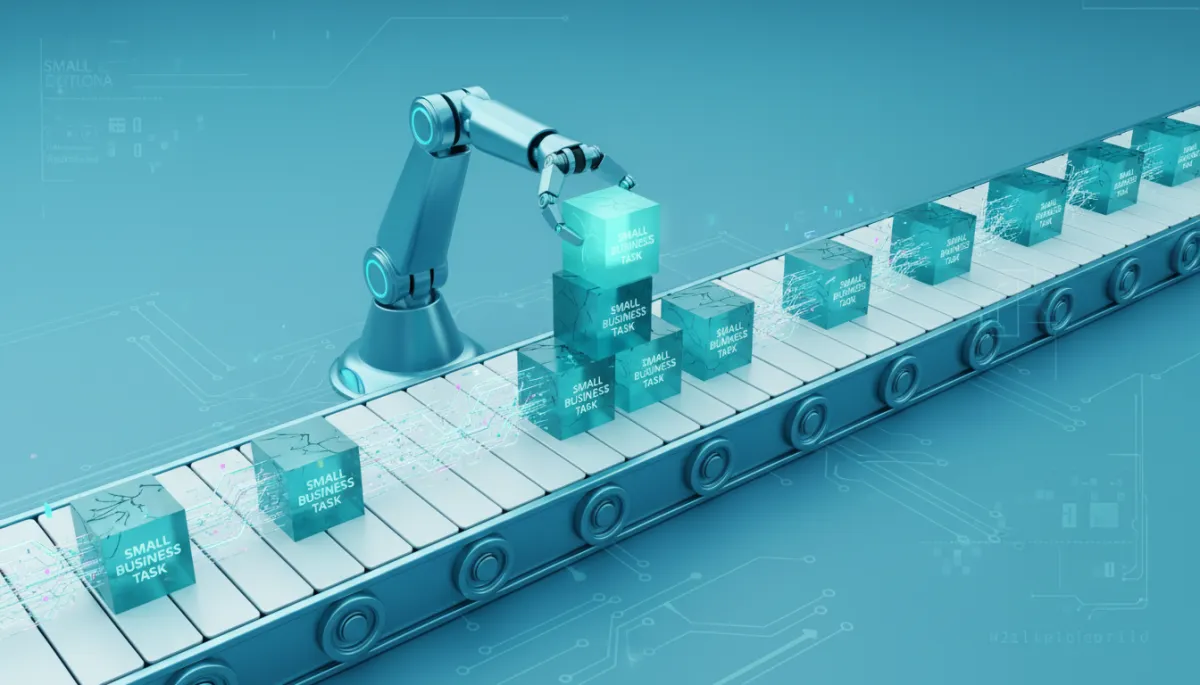
When workflows are unclear, AI simply organizes the confusion faster.
The Trap of Automating Broken Processes
One of the fastest ways to waste money on AI is to automate a process that was already failing before the tool showed up. If your booking system is double booking, your invoices are late, or your lead follow up depends on who remembered that day, AI will not repair the structure underneath it. It will only make the same problems happen faster, with less time to catch them.
Before AI touches any workflow, ask one honest question: does this process already work when a good person follows it carefully? If the answer is no, the business does not need automation yet. It needs clarity. It needs ownership. It needs a better process.
That is the part too many owners skip. They try to use AI like a shortcut around unclear roles, missing approvals, weak follow through, or old rules nobody trusts anymore. But AI is not a repair kit for broken operations. It is an accelerator. If the process is strong, it can help. If the process is weak, it can spread the weakness wider.
Pro Tip: Document one process step by step on paper first. If it looks messy there, it will be worse when automated.
AI Implementation Without Strategy: Expensive Experiments
Another reason AI automation disappoints is simple. The business never gave it a real job.
A vendor demo looks sharp. Someone hears a success story. A new subscription gets bought. The team is told, "We are using AI now," but nobody has stopped to answer the questions that actually matter. What problem is this supposed to solve? What result should improve? How will we know if it is working? By when?
When those answers are missing, the whole thing starts to drift. People try it for a few weeks, use it in different ways, and then slowly go back to old habits. Nobody tracks the starting point. Nobody measures the change. Nobody owns the outcome. The tool stays on the bill, but it never becomes part of a workflow the team actually trusts.
Then the wrong conclusion shows up. The story becomes, "AI does not work for a business like ours." But that usually is not the truth. The truth is that the tool was never given a clear target, a clear owner, or a clear standard for success.
AI should not enter the business as a vague experiment. It should enter with a purpose. If you cannot clearly define the job, the metric, and the owner before you buy it, you are not making an AI decision. You are buying uncertainty and hoping it turns into progress.

Without a clear target, AI projects become expensive, unfocused trials.
What to Fix Before Automating with AI
Before you automate anything, fix the parts of the business AI will depend on. This is the work that feels less exciting, but it is also the work that protects your time, your team, and your customer experience.
Start with clean and consistent information. If customer records are incomplete, pricing is outdated, or product details keep changing from one place to another, AI will build its answers on shaky ground. Bad inputs do not create smart automation. They create faster confusion.
Next, get the workflow out of people's heads and into something visible. Write down the steps. Name who owns each part. Define what done actually means. If nobody can explain the process clearly, the business is not ready to automate it.
Then choose a small number of metrics that matter. Not ten. Just one or two numbers that tell you whether the workflow is actually improving. That might be response time, error rate, speed to follow up, or revenue per lead. If success is vague, the project will be vague too.
And finally, put a real person in charge. Not "the system." Not "the tech team." Not a vague shared responsibility. One owner needs to be accountable for how the workflow works, how the team uses it, and whether it is creating the result it was brought in to create.
None of this is glamorous. It can feel slower than jumping straight into a new tool. But this is where real leverage comes from. When the foundation is clear, even a simple AI workflow can create visible improvement fast. When the foundation is shaky, even the best tool turns into one more thing people have to work around.
How Do I Know If My Business Is Ready for AI Automation?
Many owners quietly wonder, how do I know if my business is ready for AI automation? Readiness is less about size and more about clarity. You are likely ready for a small AI project if you can answer “yes” to most of these:
We have at least one process we repeat daily or weekly in the same way.
We can describe this process in 5–10 clear steps.
We know roughly how much time or money this process costs us now.
We have one person willing to own the setup and training for this workflow.
If you cannot check these boxes yet, your business is not behind. It just means the next step is to simplify and standardize, not to automate. When you do begin, start small: one use case, one tool, one measurable outcome.

Readiness is about clear processes and ownership, not company size.
Designing AI Workflows That Actually Help
Once your basics are in place, you can design AI workflows that quietly remove friction instead of adding it. The key is to think in very small, clear slices of work, not “transforming the whole business” at once.
Pick one friction point: slow responses, missed follow-ups, manual data entry, or similar.
Map the current steps. Note where humans add judgment versus simple copying or sending.
Let AI handle the repeatable parts: drafting responses, moving data, setting reminders, summarizing notes.
Keep humans in charge of approvals, exceptions, and final decisions.
This approach respects how your team already works. It uses AI as a quiet assistant, not as a sudden replacement. Over time, as trust grows, you can expand the scope of automation with more confidence.

The best AI workflows let humans decide and AI handle the repetition.
Bringing It All Together
AI will not rescue a messy business. It will mirror it. Local businesses often struggle because they jump in with AI implementation without strategy, make classic AI workflow mistakes small business teams are known for, and focus on tools instead of fixing the underlying processes first. The result is predictable: frustration, sunk costs, and the belief that AI is “not for us.”
A quieter, more effective path is available. Start by cleaning your data, clarifying your workflows, and choosing one specific friction point to improve. Ask honestly, how do I know if my business is ready for AI automation? If it is not ready, work on readiness instead of forcing tools into place. If it is ready, begin small, measure clearly, and let AI prove its value step by step.
In the end, AI is just another way to express your systems. When your systems are simple, intentional, and aligned with how your team serves customers, automation becomes an amplifier of what already works. That is when AI stops failing local businesses and starts quietly supporting them.